
 MEET
 MEET
 MEET
 MEET
 MEET
 PATIENT FORMS
 PATIENT PORTAL
 FINANCING AND INSURANCE
 YOUR FIRST VISIT
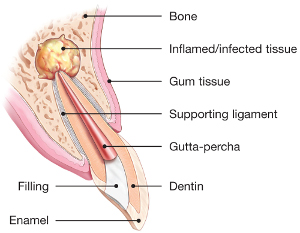
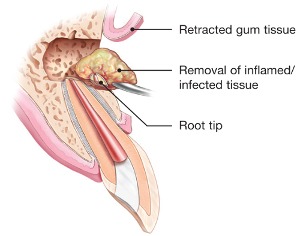
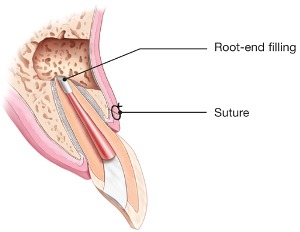
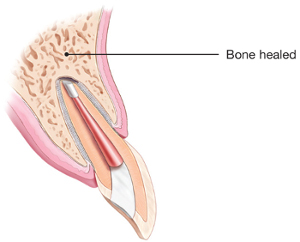
The images below are helpful in illustrating how this procedure can help our patients. Click on a link below to access visual aids:
- Failing Root Canal – See Image
- Endodontic Surgery Explained – See Image
- Endodontic Surgery Root End Filing – See Image
- Endodontic Surgery Healed – See Image
At Northwest Dental Specialists, our experienced team is fully equipped to provide a variety of endodontic surgical procedures designed to treat existing endodontic issues and prevent further problems in the future.
What Is Endodontic Surgery?
Endodontic surgery includes any surgical procedure associated with treating disease or injury associated with the interior pulp of a patient’s teeth.
Why Do I Need Endodontic Surgery?
While most patients’ teeth can be saved from extraction with a simple, non-surgical root canal procedure, some require more complex, surgical treatment.
Our endodontists use endodontic surgery to locate fractures or hidden root canals that might not appear on X-ray images but manifest with painful symptoms and sensitivity in the tooth.
Endodontic surgery can also treat damaged root surfaces and the surrounding bone.
Endodontic Surgery Services Available at Northwest Dental Specialists
Our endodontists are experienced in performing the following endodontic surgical procedures:
Apical Surgery
During apical surgery, our endodontists remove a portion of the tip of a tooth’s root to access the root canal, clean it, and seal it.
We might recommend apical surgery if a patient has signs of infection in or near the tip of their root canal. Apical surgery may also save a tooth when simple root canal therapy does not provide adequate access to eliminate a root canal infection.
Preparing for Endodontic Surgery
If you are scheduled for endodontic surgery, our endodontists can answer any questions you might have leading up to your appointment.
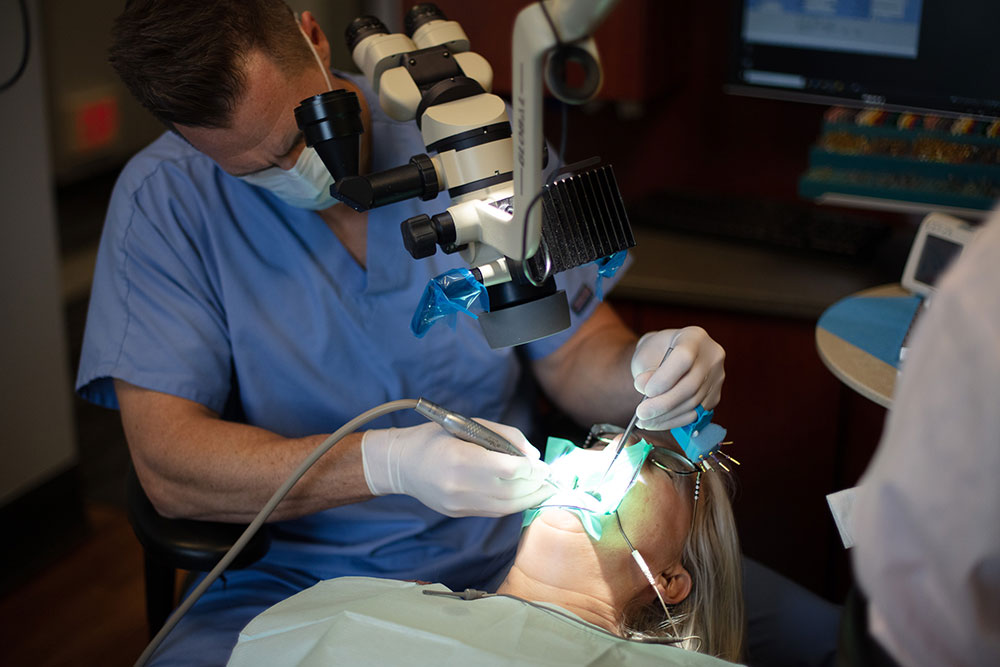
Endodontic surgical procedures occur during a single appointment, using local anesthetics to thoroughly numb the treatment area and nitrous oxide to provide a calm, comfortable experience throughout treatment. As a result, patients can return home easily and typically resume normal activities right away.
After endodontic surgery, you might experience some discomfort or minor swelling while your incision heals. This is a normal part of the recovery process for any endodontic surgery. Our endodontists can recommend an appropriate medication to alleviate any discomfort. Typically, over-the-counter medications such as ibuprofen, acetaminophen, or aspirin offer adequate relief.
In some rare cases, patients might experience pain or significant swelling that is not easily remedied with over-the-counter medications. This can be an indication of a problem, such as an infection. If you find yourself in this situation, we recommend contacting our office as soon as possible for evaluation and proper treatment.
Learn More About Endodontic Surgery in Park Ridge and Mount Prospect
Whether you need surgical endodontic retreatment, have an emergency dental injury, or require another endodontic surgical procedure, our experienced endodontists at Northwest Dental Specialists are fully equipped to provide you with the proper treatment to restore your teeth and mouth to their normal, full function.
To learn more about endodontic surgery or to find out if treatment at Northwest Dental Specialists is right for you, we welcome you to contact either of our offices.