
 MEET
MEET MEET
MEET MEET
MEET MEET
MEET MEET
MEET PATIENT FORMS
 PATIENT PORTAL
 FINANCING AND INSURANCE
 YOUR FIRST VISIT
Hearing “you need a bone graft” can be surprising, especially if you thought only the tooth needed attention. At Northwest Dental Specialists, we approach these conversations with clarity and guidance because bone grafting is a common, carefully planned part of modern specialty care. It supports long-term oral health and creates the conditions needed for predictable implant placement.
If you’re considering a dental implant, rebuilding the jaw’s support can play a vital role in your final outcome. Bone grafting for dental implants is one of the most effective ways to restore bone structure after tooth loss, gum disease, or a previous extraction. When done for the right reasons and with the right plan, it creates a solid foundation for the next phase of care.
What does bone grafting for dental implants actually do?
A dental bone graft is a surgical procedure that places graft material in an area where bone loss has reduced stability. The goal is to encourage new bone growth so the graft site develops healthier bone density over time. Bone grafting strengthens the jaw to hold what is essentially a small metal post functioning like a tooth root.
Your body does the biological work after the procedure. The graft material acts as a scaffold for tissue regeneration, allowing bone tissue to rebuild and integrate with existing bone. With proper healing, the area becomes stable enough to support dental implants and improve function for patients with missing teeth.
Why would someone need bone grafting after tooth loss?
The jawbone depends on stimulation from teeth. After tooth loss, the jaw no longer receives the same pressure and signals through the root, leading to bone loss. This can happen even when a tooth extraction site heals normally and may be accelerated by periodontal disease or gum disease.
Common reasons for bone grafting include:
- Not enough bone for secure dental implant placement
- Bone loss due to periodontal disease
- Structural changes in the upper or back jaw over time
- Prior trauma, infection, or a compromised surgical site
Bone grafting rebuilds the bone needed for a dental implant to anchor properly. It also supports gum tissue and soft tissue contours, influencing how natural your final restoration looks and feels.
“Do I really need a bone graft?” What your specialist is evaluating
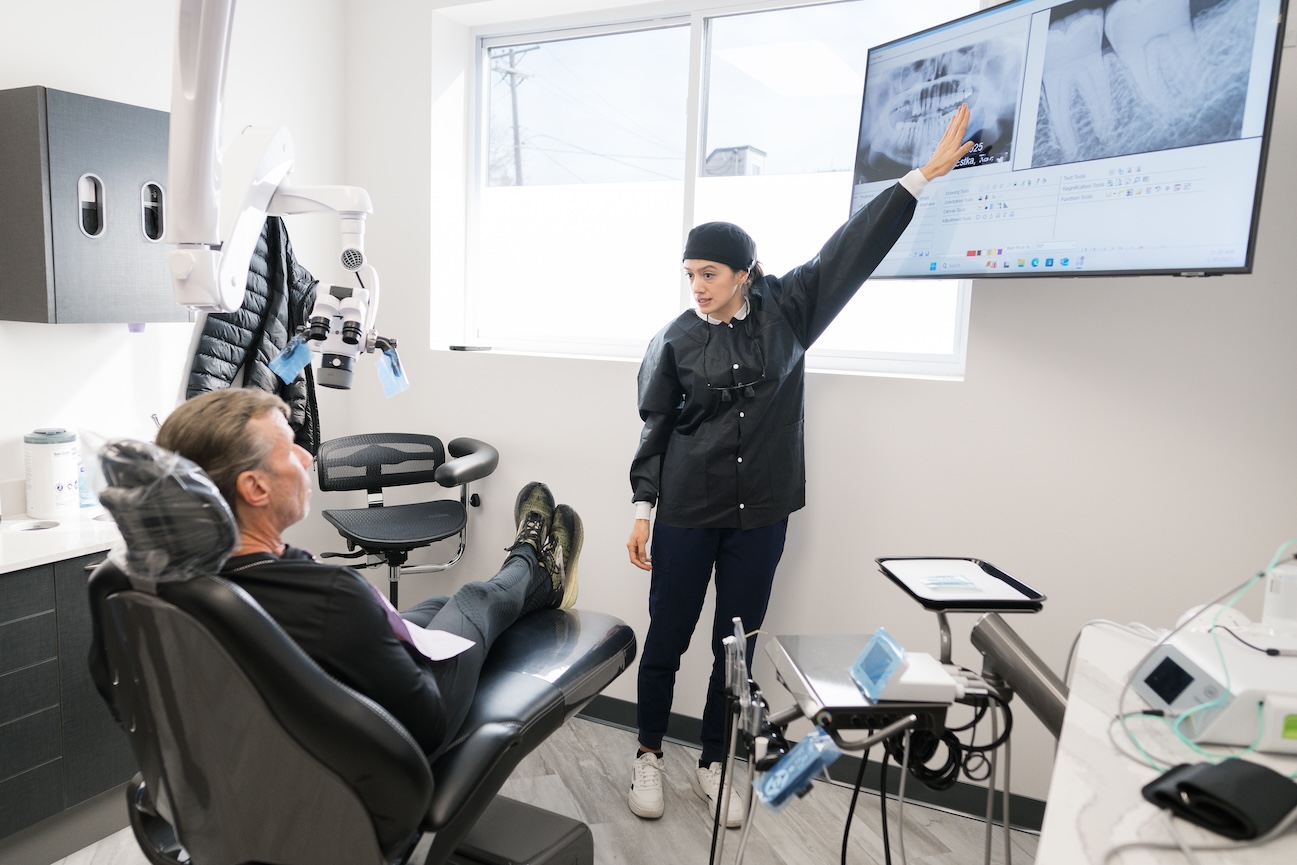
This question deserves a clear, patient-specific answer based on measurable anatomy. Your provider evaluates the bone structure where the implant is planned, assessing bone density, height, and width. At Northwest Dental Specialists, this evaluation may include imaging such as Cone Beam CT to visualize the existing bone and surrounding anatomy in detail.
The decision often comes down to whether there is enough bone to support implant placement in a stable, long-term way. Your treatment plan may also consider the condition of your soft tissue, the health of nearby teeth, and how a graft could improve predictability. When appropriate, we coordinate with your referring dentist to align timing and restorative planning.
Types of bone grafts and where graft material comes from
Patients often assume a bone graft means taking bone from their own body. While that is one option, it’s not the only one. Specialists recommend grafting material based on clinical needs, the site, and the desired volume.
Common bone graft material options include:
- Autograft (own bone): Taken from your body, often from areas like the hip
- Allograft: Human donor bone sourced through regulated bone banks
- Xenograft: Processed graft material from animal sources
- Alloplast: Synthetic material mimicking natural bone
Each approach supports bone growth and integration with your natural bone during healing. The priority is biocompatibility, stability, and predictable results.
Bone grafting, ridge augmentation, and sinus lift: how they relate
“Bone grafting” is sometimes used as an umbrella term, but specific procedures rebuild different areas. Ridge augmentation is a common example. After tooth loss, the ridge that once held the tooth can shrink, and ridge augmentation rebuilds it to better support a future implant.
For the upper jaw, a sinus lift may be recommended when the sinus space limits available bone for implant placement. Adding bone material in a controlled way allows the area to develop enough bone to support an implant in the back of the jaw. These procedures are chosen based on anatomy, not guesswork.
What to expect during a bone graft procedure
Bone graft procedures are planned carefully, with attention to comfort and precision. While every case is different, the general goal is to place grafting material where support is needed and allow the area to heal so new bone can form. The procedure is commonly completed with local anesthesia, and sedation options may be discussed for anxious patients or more involved care.
Steps often include:
- Preparing the area and creating access with a small incision
- Placing the graft material or bone in the targeted area
- Stabilizing and protecting the graft site to support tissue regeneration
- Providing post-operative instructions and follow-up planning
If extensive grafting is needed, your specialist will explain the sequence of care and how it affects your overall implant process. Clear expectations help patients feel informed from the start.
Healing after bone grafting: what it means for daily life
Healing is where the real transformation occurs. Over time, transplanted bone or graft material integrates with existing bone as your body builds healthy bone in the area. This process can take months, and your specialist will monitor readiness for implant placement based on clinical evaluation.
During early recovery, patients are typically advised to protect the area and choose soft foods to avoid disrupting the site. You may also receive guidance on oral health routines to keep the area clean while supporting healing. Good dental care during this window supports predictable bone growth and preserves the work already done.
How bone grafting supports the success of dental implants
A dental implant needs stability to function like a natural tooth root. Adequate bone density and a strong structure improve the implant’s chances of integrating well and remaining stable over time. Bone grafting rebuilds the foundation the implant depends on.
This foundation matters for both function and appearance. It supports gum tissue contours, reduces the risk of complications from thin or missing bone, and improves the likelihood of straightforward implant placement. In many cases, bone grafting makes implants possible when they otherwise wouldn’t be recommended.
Coordinated specialty care in Park Ridge and Mt. Prospect
Bone grafting sits at the intersection of surgical planning, periodontal health, and restorative goals. Northwest Dental Specialists combines advanced periodontal expertise and implant-focused surgical solutions in one setting, emphasizing communication and continuity. For patients, this often means fewer handoffs and a clearer path from diagnosis to treatment to restoration.
We also collaborate with your general dentist, especially when planning the final crown, bridge, or implant-supported dentures. Early communication helps steps move efficiently and outcomes become more predictable.
Ready to talk through your options?
If you’ve been told you need a dental bone graft, you deserve an explanation that connects the recommendation to your smile, comfort, and long-term oral health. Bone grafting for dental implants is a practical, well-established step toward restoring missing teeth and rebuilding healthy bone for stable results.
To discuss bone grafting, ridge augmentation, or the next step in your dental implant placement, contact Northwest Dental Specialists in Park Ridge or Mt. Prospect to schedule a consultation. We’ll review your imaging, explain your options clearly, and coordinate with your referring dentist to keep your care moving forward with confidence.