
 MEET
MEET MEET
MEET MEET
MEET MEET
MEET MEET
MEET PATIENT FORMS
 PATIENT PORTAL
 FINANCING AND INSURANCE
 YOUR FIRST VISIT
Pain that arises when your teeth come together can be unsettling. You might feel a sharp pain when biting hard foods, a sudden twinge in the back teeth, or a lingering ache after releasing pressure. This type of pain often signals a problem inside the tooth or around the roots, requiring timely care and a focused dental exam.
At Northwest Dental Specialists in Park Ridge, IL, we provide specialty endodontics and periodontics under one roof, using advanced technology for precise diagnosis and effective treatment. We also coordinate with your trusted dentist to ensure clear next steps, efficient scheduling, and peace of mind.
Why does my tooth hurt when I bite down?
Tooth pain with biting often results from extra pressure on an inflamed area, a damaged tooth structure, or irritation in the supporting tissues. Common causes include a cracked tooth, a loose filling, deep decay, or periodontal disease. Sinus pressure from a sinus infection can also mimic tooth pain, especially in the upper back teeth.
The good news is that pain with biting is a useful clue. Early diagnosis and professional care can often address the issue before it leads to further damage or tooth loss.
A quick way to describe the pain (and why it matters)
When contacting a dental office, the details you share can help narrow down potential causes. Over 24 to 48 hours, try to observe:
- Whether the pain is sharp or dull
- Whether it occurs during biting or on release
- Whether the tooth feels different from surrounding teeth under pressure
- Whether there’s sensitivity to cold, heat, or sweets
- Whether you notice swelling, a bad taste, or a gum pimple indicating a possible abscess
This information helps your specialist evaluate the tooth pulp, surrounding tissues, and bite function.
Most common causes of tooth pain when biting
Biting pain can stem from various issues, often requiring a careful evaluation to identify the cause and determine the best treatment.
Cracked tooth or fracture
A cracked tooth is a common cause of biting pain, especially when chewing hard foods. Cracks can be hard to detect, and pain may vary depending on the direction of force. If the crack reaches the pulp, it can cause significant discomfort and increase the risk of infection. Early treatment can prevent further damage and protect the tooth.
Deep decay reaching the nerve
Tooth decay that progresses into deeper layers can expose dentin, leading to sensitivity, especially to cold or sweets. If decay reaches the pulp, biting can become painful due to inflammation in the confined space. Root canal therapy may be needed to remove infected tissue and alleviate pain.
Loose filling or high bite after a filling or crown
A loose filling can shift during chewing, causing sensitivity and discomfort. Similarly, a restoration that sits too high can place extra pressure on one tooth, leading to pain and tenderness. These issues are often simple to fix but require prompt attention to prevent further damage.
Infected tooth or abscessed tooth
An abscessed tooth occurs when infection develops inside the tooth or near the root. Symptoms include pain with biting, throbbing, swelling, and sometimes a bad taste. Prompt care is essential to prevent the infection from spreading and damaging surrounding bone. Treatment may involve root canal therapy, retreatment, or surgery to address the infection.
Gum disease and periodontal problems
Pain during biting isn’t always due to issues inside the tooth. Gum disease can inflame the tissues supporting the tooth, making biting uncomfortable. Advanced inflammation can lead to gum recession, pocketing, and bone loss, potentially resulting in tooth loss if untreated. Periodontal therapy can address these issues and stabilize the tooth.
Sinus pressure affecting upper back teeth
Sinus infections can cause pressure that feels like tooth pain in the upper back teeth, as their roots are close to the sinus cavity. A focused exam can distinguish sinus-related discomfort from dental issues like decay or cracks. If sinus involvement is suspected, your dental team may recommend medical evaluation while ruling out dental causes.
When tooth pain with biting is an emergency
Certain symptoms warrant prompt professional attention, especially if they worsen or interfere with eating and sleep. Seek emergency care if you notice:
- Swelling of the gum or face, or a gum pimple
- Fever, worsening pressure, or tenderness near the tooth roots
- A cracked tooth from trauma
- Persistent bad taste, drainage, or signs of an abscess
- Severe pain that makes chewing difficult
Timely care can prevent complications and protect surrounding tissues.
What to do at home while you wait for evaluation
While waiting for a dental evaluation, you can manage symptoms and protect the tooth with these steps:
- Avoid hard foods and chew on the opposite side.
- Rinse with warm salt water (1 teaspoon of salt in a glass of warm water).
- Use over-the-counter pain relievers as directed.
- Maintain good oral hygiene with gentle brushing and flossing.
If the tooth is sensitive to cold, stick to room-temperature foods and drinks.
How an endodontic evaluation identifies the cause
Biting pain requires a targeted approach. Endodontists specialize in diagnosing and treating issues related to the tooth pulp and root canal system. Diagnosis may include:
- A dental exam with bite tests and gum palpation
- Evaluation of existing fillings or restorations for mobility or leakage
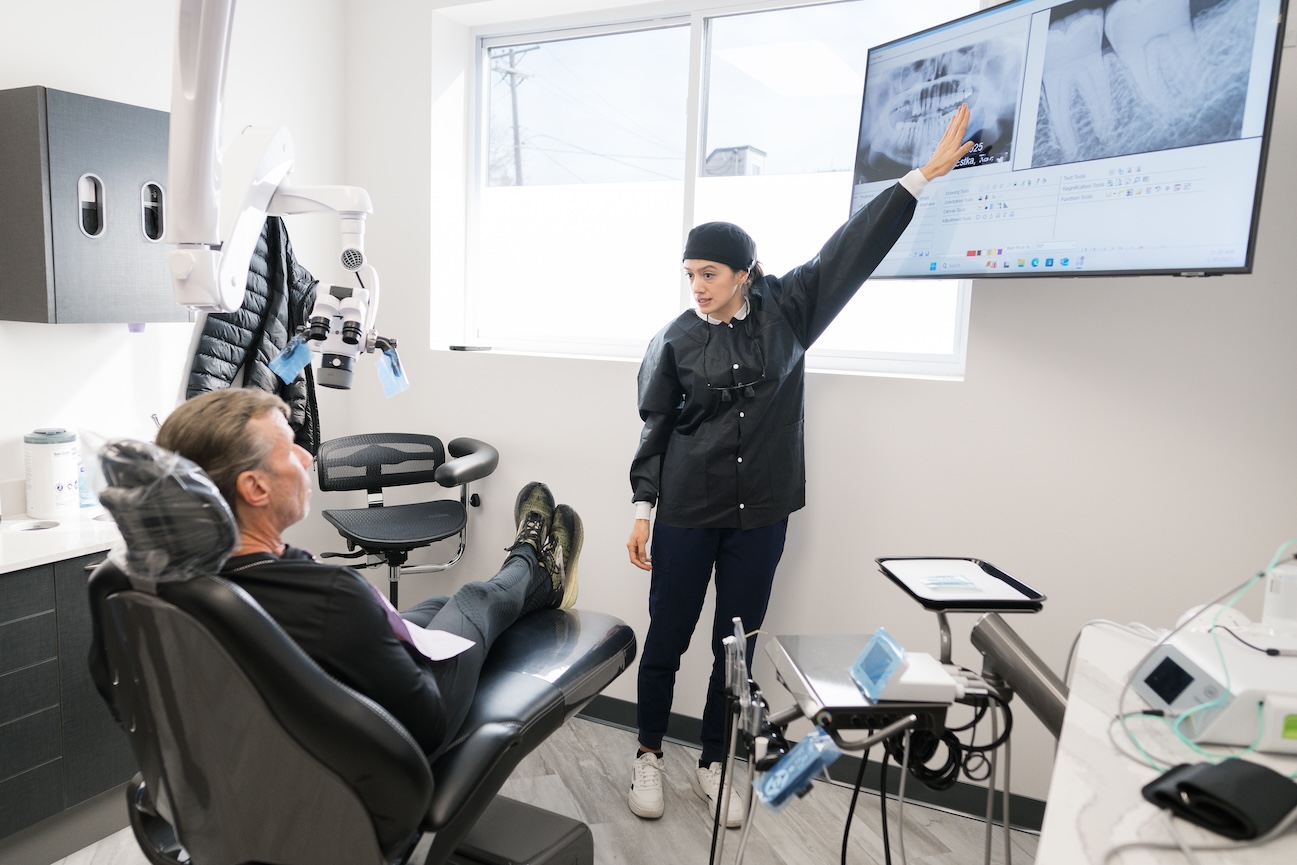
- Imaging, such as Cone Beam CT, to assess the root canal space and surrounding bone
- Discussion of bite forces and potential stress on the tooth
Endodontists are trained to diagnose subtle or intermittent symptoms and perform procedures like root canal therapy with precision.
Treatment options that protect your natural tooth
Treatment depends on the diagnosis and the condition of the tooth. Common options include:
- Root canal therapy to remove inflamed or infected pulp and preserve the tooth
- Management of cracked teeth, often involving endodontic treatment and restorative care
- Retreatment or surgery for previously treated teeth with persistent infection
- Periodontal therapy for gum disease contributing to biting discomfort
The goal is to provide effective care while supporting long-term dental health.
When to schedule an appointment
If tooth pain when biting persists for more than a day or two, or if it’s severe, schedule a dental exam. Pain that worsens, changes quickly, or includes swelling requires prompt care. Early diagnosis often allows for more conservative treatment and prevents complications.
At Northwest Dental Specialists in Park Ridge, IL, we offer endodontic and periodontal care with a focus on clear communication and collaboration with your general dentist. If you’re experiencing tooth pain, a possible cracked tooth, or signs of infection, contact us to schedule an evaluation and find relief.